Blueberry Breeding
Delivering resilient, market-ready blueberry varieties for Scottish and international growers
Launched in 2017, our Blueberry Breeding Consortium is developing improved varieties suited to diverse growing conditions. A major milestone is Highland Charm — the first Scottish-bred blueberry — the result of 10 years of research and over 300 crosses to select plants adapted to Scotland’s climate from Vaccinium corymbosum.
The future of blueberries
Blueberries are the most popular berries of the genus Vaccinium, subgenus Cyanococcus. From the same family as cranberries (Oxycoccus) and the wild-growing lowbush blaeberries (Myrtillus), blueberries are renowned for being packed with health-promoting compounds including antioxidant, polyphenols and vitamins.
In the United Kingdom the high consumer demand for blueberries, combined with the lack of appropriate high-quality cultivars suitable for UK climatic conditions, has resulted in a real need by the industry for the rapid development of new blueberry cultivars. High fruit and nutritional quality and expanded fruiting season are required to meet the demand for homegrown soft fruit.
Soft fruit production is a success story for UK horticulture but supply does not meet demand. Blueberry has tremendous potential for expansion in the UK with only a few percent of demand currently met from home production. Breeding is slow (>10 years) but the development of genetic markers will speed up selection for early release of new varieties by around five years. Managing traits linked to production costs, such as yield, nutrient use efficiency and fruit size, will be a significant advance for growers and being able to breed climate resilience will have long-term benefits across the industry.
Dr. Susan McCallum, Blueberry breeder and researcher
Breeding high quality and consistently high yielding soft fruit varieties are urgently required to ‘future proof’ the UK industry. We are rising to that demand.
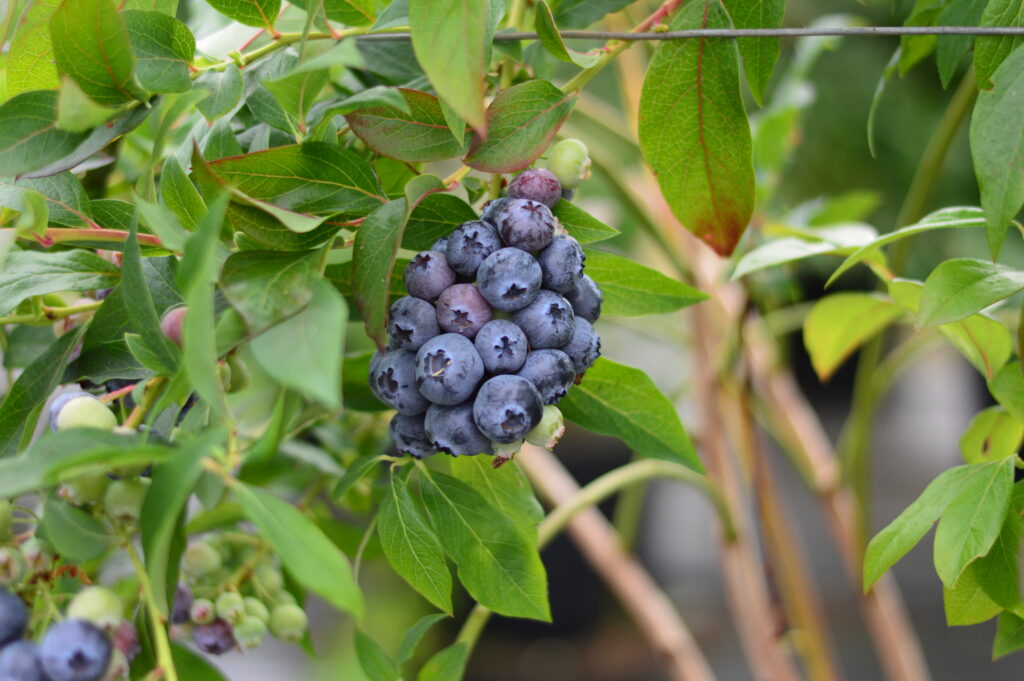
The current challenge is breeding blueberries with greater levels of genetic diversity which can withstand slight climatic changes that meet both grower and consumer expectations in terms of yield and size but without compromising on sensory quality. This is a challenge we are striving to overcome and breed these varieties for the wider world.
As blueberries grow in global popularity, growers need varieties that offer strong productivity, consistent quality and environmental resilience. James Hutton Institute Scientific Services develops blueberry varieties that meet these evolving industry needs.
Breeding programmes target characteristics such as fruit quality, plant health, yield potential and adaptability to different growing environments.
Blueberry breeding programmes support growers, nurseries, food producers and retailers by providing improved varieties designed for commercial success.